
On Setting, Worldbuilding and Subtext

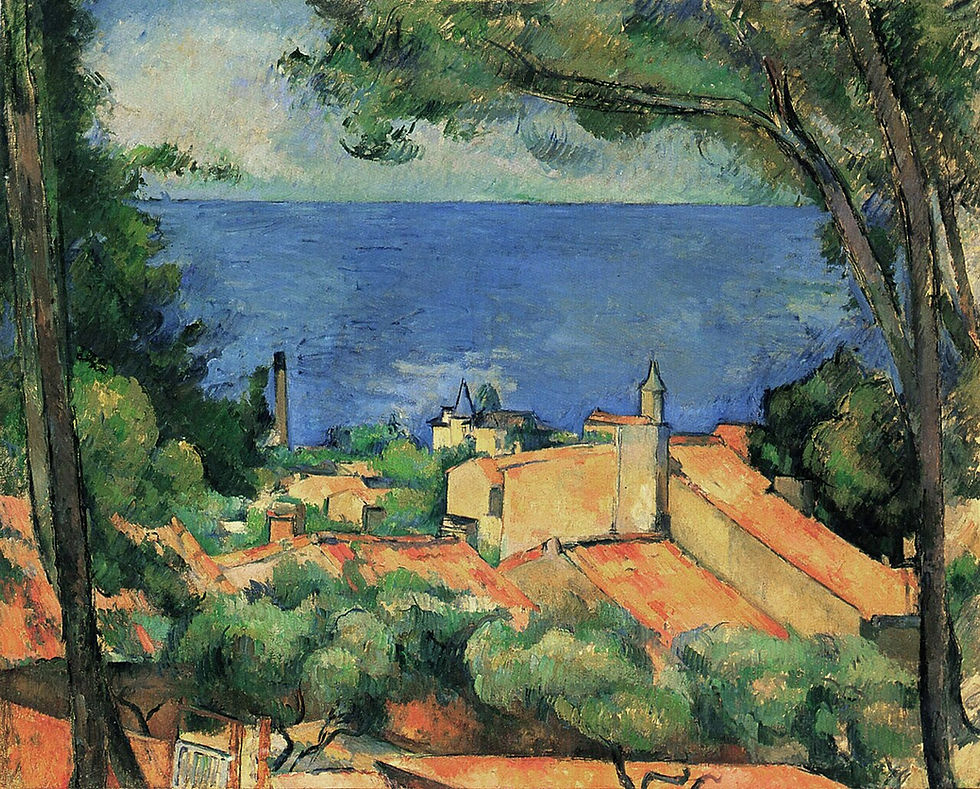
Readers coming to Andre Aciman’s Call Me By Your Name only after having seen Luca Guadagnino’s film adaptation will perhaps notice that the luxurious setting depicted in the film is less of a concern in the book. In a way, this makes perfect sense-- film is a visual medium, after all. But we can also say that the amount of attention a writer pays to setting is a choice; in other words, a writer may use it to shape the story as much or as little as they like.
When a writer really leans into setting, it is often described as a "character" in its own right because of how strongly its presence is felt. A good example of this is Where the Crawdads Sing by Delia Owens, which follows a poor young woman on trial for murder in a town long bent on ostracizing her. The marsh where she lives is described often and in rich detail, as is the surrounding swamp and neighboring town. Careful readers may notice, however, that the details tend to follow a sort of pattern:
On the morning of October 30, 1969, the body of Chase Andrews lay in the swamp which would have absorbed it silently, routinely.
Claiming territory hadn’t changed much since the 1500s. The scattered marsh holdings weren’t legally described, just staked out natural-- a creek boundary here, a dead oak there-- by renegades.
“If anybody comes, don’t go in the house. They can get ya there. Run deep in the marsh, hide in the bushes…”
Together the marsh and the sea separated the village from the rest of the world…
No ladies or children stepped inside [the beer hall] because it wasn’t consider proper, but a take-out window had been cut out of the wall so they could order…
The stores and businesses weren’t joined together as in most towns but were separated by small, vacant lots brushed with sea oats and palmettos, as if overnight the marsh had inched in.
Ever since Barkley Cove had been settled in 1751, no lawman extended his jurisdiction beyond the saw grass.
The setting, then, is often described in terms of boundaries: sometimes man-made, sometimes natural, sometimes creeping, porous or vulnerable. What’s more, it’s an idea that Owens extends to all other characters and aspects of the novel because it is simply a manifestation of the story’s subtext. Why boundaries? In this particular case, it reflects the sexual violence and discrimination that are central to the novel’s plot.
To better understand subtext, think of a story and everything in it as an orchestra, where a symphony’s melody and all its variations are passed from one instrument to another. But instead of cellos and violins, story has characters, plot, dialogue and setting. Subtext, then, is a way to both comment on the main action while also uniting the story elements into one cohesive whole. This is why problems with setting-- or with any other story element-- often boil down to problems with subtext: in other words, the connection to the story’s main through-line is either too weak or absent entirely.
This is a problem often encountered by developing writers of fantasy, for whom setting often takes on epic proportions. Here, it isn’t even setting at all but worldbuilding, a wonderful exercise of the imagination that sometimes precedes the story itself. But here is where some writers run into trouble: finding a story to match the world. It can certainly be done, and for the craft conscious writer, it often is. However, if the story world-- its government, geography, magical systems, etc.-- hasn’t already been formed with some overarching idea in mind, characters may feel randomly dropped within it.
To use a well known example, consider the Harry Potter series, built around the evil machinations of Lord Voldemort and his followers. However rich the story world may be-- and however much that richness may account for the book's enormous success-- it often reflects a single, overarching idea: boundaries. Why boundaries? Because Lord Voldemort and his followers are constantly crossing lines-- of justice, personal freedom, even death itself.* Boundaries, then, is the lens through which everything else in the series is created, including the setting. To see the idea in action, let’s call up some details from Book 1:
The plane of glass at the reptile exhibit disappears
The Leaky Cauldron leaks
Must tap on wall to enter Diagon Alley
Platform 9 ¾ is accessed by running through the barrier
Hogwarts is a castle
House dormitories are password protected
The portraits move from frame to frame, often visiting each other
The ceiling of the Great Hall is bewitched-- are we inside? Outside? The boundary is unclear.
The Forbidden Forest is forbidden
The boys have to enter the girls' bathroom to save Hermione from the troll
The troll “escaped” from the dungeons…
For details that aren't related to the setting but that still carry the subtext, consider Aunt Petunia spying on the neighbors, Hagrid unable to keep a secret, and Harry accessing forbidden areas of the castle with the help of his invisibility cloak. The idea can even be traced beyond the original series and into other stories of the franchise.** As discussed earlier, this is where knowing how to write within the logic of the world comes in handy.
For a final example of how writers sometimes work with setting, let’s look at Season 1 of the Netflix series Stranger Things. Created by the Duffer Brothers, the story is driven by Dr. Brenner, a government scientist trying to conceal his secret experiments on the kidnapped Eleven. The experiments often involve submerging Eleven in a water-filled sensory deprivation tank in order to enhance her powers. Careful viewers will perhaps notice echoes of this imagery elsewhere in the story: there are events which unfold at a pool party as well as a flooded quarry. There are even scenes where a character develops photos in a darkroom, handling prints in liquid-filled trays.
I imagine these smaller environments within the world of Stranger Things were the result of a brainstorm as the show writers tried to find ways, beyond the overarching idea***, to unite the various subplots: How can we recreate the sensory deprivation tank elsewhere in the story? A pool? A hot tub? A bath tub? A reservoir? From the various possibilities the subplots grew.
The show writers, however, did not limit this weaving to setting-related details; at one point Eleven uses her powers to make a bully wet himself. This is why to teach setting apart from the other story elements, as is sometimes done in craft books or creative writing courses, gives it something of a false distinction. Unless discussions emphasize the greater connection between setting and the main action of the story, it is more helpful to treat setting as just another possible expression of subtext.
*I can hear you asking: Boundaries? Again? Yes, again-- it’s a very popular idea, one that has shaped our literature from the very beginning.
**I sometimes joke that after years of writing stories obsessed with boundaries, JK Rowling became a bit too fond of them in real life as well.
***I'll let viewers of the series guess what it is...

Comments